Breed Profile
Bengal Kittens UAE
The Bengal is not for every household — and it does not apologise for that. Wild beauty, remarkable intelligence, and a personality that makes every other breed feel slightly understated. For the right owner, it is incomparable.
Temperament
Active & curious
Coat
Short, sleek, patterned
Activity
High
Grooming
Minimal
Introduction
Living Art With a Heartbeat
The Bengal cat was developed through the careful crossing of domestic cats with the Asian Leopard Cat — a small wild feline native to South and Southeast Asia. The goal was to capture the extraordinary visual qualities of a wild cat in a fully domestic, companion-quality animal. The result is one of the most visually striking creatures in the domestic cat world.
Today's Bengal — specifically SBT (Stud Book Tradition) Bengals, which are at least four generations removed from their wild ancestors — is a fully domestic cat in temperament. What remains is the coat: a short, sleek pelt covered in rosettes or marbling that catches light in a way no other domestic breed can replicate. In certain light, a Bengal glitters.
Our Bengal kittens are SBT only — never early-generation. Temperament is as important to us as appearance, and our kittens are handled and socialised extensively from birth to ensure they are genuinely companion-quality animals.
Appearance
Exotic Markings & Wild Beauty
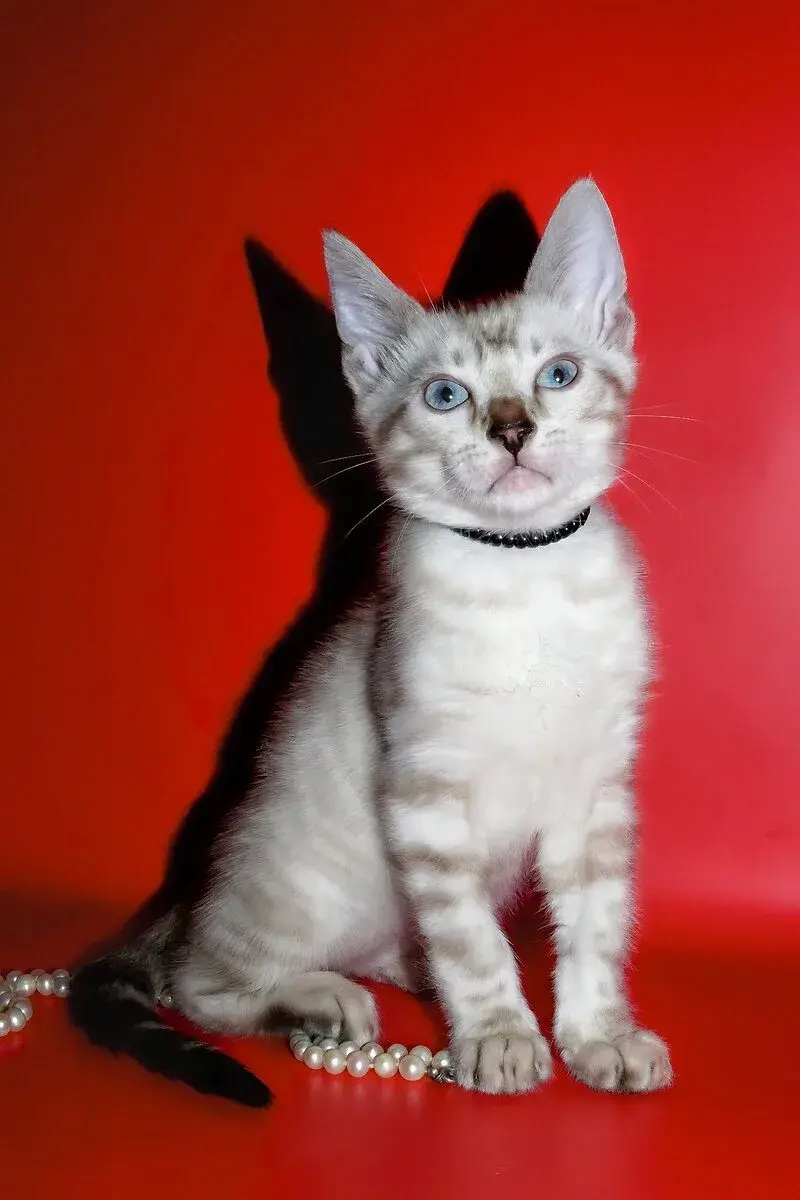
The Bengal's coat is unlike anything else in the domestic cat world. The markings — rosettes, spots, or flowing marbling — are complex and multi-tonal, with each pattern unique to the individual cat. Brown spotted and marbled tabby are the most iconic, but snow Bengals (white or cream background with patterning) and silver Bengals have their own exceptional visual drama.
The coat itself is short, dense, and strikingly soft — it has a pelt-like quality rather than the fluffy texture of many domestic breeds. The Bengal's musculature is visible beneath it: an athletic, medium-to-large build with long hind legs that give the cat a characteristic slight rump-high posture reminiscent of its wild ancestry.
The face is strong and angular — a broad forehead, pronounced whisker pads, and eyes that can range from gold to green to hazel depending on coat colour. In motion, the Bengal moves with a fluid, purposeful grace that is entirely its own.
Ownership
Is a Bengal the Right Cat for You?
We believe in complete honesty about this breed, because the Bengal is genuinely not the right choice for every household — and placing a Bengal with a family that is not prepared for it does no one any favours.
The Bengal is an active, intelligent, and highly engaged animal. It requires more daily interaction than almost any other domestic breed. It will find ways to entertain itself if you do not provide them — and those ways are not always compatible with intact furniture, undisturbed sleep, or an uninterrupted working day. A Bengal that is under-stimulated is a Bengal that will remind you of its existence with considerable persistence.
For households that can meet those needs — that want a cat genuinely present in their lives, that enjoy interactive play, that find pleasure in the intellectual engagement of a clever animal — the Bengal is one of the most extraordinary companions available. The depth of bond that forms between a Bengal and a committed, engaged owner is something that owners of other breeds rarely experience in quite the same way.
If you are uncertain whether your household is a good fit, we encourage you to speak with us before enquiring. We will give you an honest assessment, not a sales pitch.
Daily Life
Intelligence, Exercise & Enrichment
Intelligence & Training
Bengals are among the most trainable of domestic cat breeds. They learn quickly, respond well to positive reinforcement, and many can be taught to walk on a lead, perform tricks, and navigate puzzle feeders with considerable skill. Their intelligence means they become bored with repetitive stimulus, so variety is important.
Many Bengal owners find that lead walking — a practical option even in UAE outdoor spaces during cooler months — provides excellent mental and physical enrichment. Our kittens are accustomed to harness handling from early kitten-hood.
Exercise Requirements
Meaningful daily play is not optional for a Bengal — it is a welfare requirement. Two or three interactive play sessions of fifteen to twenty minutes each is the realistic minimum. Wand toys, laser pointers, and fetch games all work well. The key is genuine interaction; self-play with a toy on the floor will not substitute.
Vertical space is particularly valued — tall cat trees, wall-mounted shelving systems, and elevated platforms give the Bengal outlets for its natural climbing and surveying instincts. A well-designed vertical environment can make an apartment substantially more enriching for a Bengal.
Grooming, Health & Documentation
The Bengal's short, dense coat is one of its most practical qualities. It requires minimal grooming — an occasional wipe with a chamois or soft cloth to bring out the natural sheen is often all that is needed. Shedding is low compared to longhaired breeds.
Our Bengal breeding cats are tested for Progressive Retinal Atrophy (PRA-b) and HCM. Health records are reviewed before rehoming, and every kitten leaves with vaccinations, microchipping, and a veterinary health certificate. Our health guarantee outlines our commitments in full.
Further Reading
From the Emirates Kitten Haven Journal
Expert guides and helpful advice to support you in understanding and caring for your Bengal.
Common Questions
Bengal Kitten FAQs
Are Bengals suitable for first-time cat owners?
Bengals are a breed that rewards experience and commitment. They are not recommended as a first cat for those with no prior feline ownership experience, primarily because their activity level, intelligence, and need for engagement are significantly higher than most breeds. That said, a committed, active first-time owner who has thoroughly researched the breed can absolutely succeed — preparation and realistic expectations are everything.
How much exercise and stimulation does a Bengal need?
Bengals need meaningful daily interaction and play — this is not optional for their wellbeing. Two or three play sessions of fifteen to twenty minutes each, supplemented with puzzle feeders, climbing structures, and rotating toys, are the baseline. A Bengal left without adequate stimulation will find its own entertainment, which is rarely in the owner's interest.
Do Bengals like water?
Many Bengals have a genuine fascination with water — they may paw at running taps, investigate their water bowl with unusual enthusiasm, or express interest in bathing. This is a breed trait that owners find either charming or mildly inconvenient depending on context. A pet water fountain is an excellent investment for a Bengal household.
Are Bengals aggressive?
A well-bred, properly socialised Bengal is not aggressive. They are confident, assertive, and active — which is quite different from aggression. Our kittens are handled extensively from birth and exposed to varied household experiences to ensure they develop the confident, social temperament the breed is known for at its best.
Can a Bengal live in an apartment in the UAE?
Bengals can adapt to apartment living, but it requires a genuine investment in vertical space, enrichment, and daily interactive play. A Bengal in an under-stimulated apartment will become frustrated and potentially destructive. A Bengal in a well-appointed apartment with climbing walls, puzzle feeders, and an engaged owner can be entirely content.
What generations are your Bengal cats?
Our Bengals are SBT (Stud Book Tradition) — meaning they are at least four generations removed from their Asian Leopard Cat ancestors. SBT Bengals have the full domestic temperament of a well-bred companion cat while retaining the extraordinary appearance the breed is celebrated for. We do not work with early generation (F1–F3) Bengals.
What health tests do you perform on Bengal breeding cats?
Our Bengal breeding cats are tested for Progressive Retinal Atrophy (PRA-b), which causes blindness and has a known genetic marker in Bengals. We also screen for Hypertrophic Cardiomyopathy (HCM). Health records are reviewed before every rehoming, and all kittens leave with vaccinations, microchipping, and a veterinary health certificate.
How do I know if a Bengal is right for my household?
The most honest answer: if you want a cat that will quietly coexist in the background of your life, a Bengal is probably not the right choice. If you want a cat that is genuinely, actively present — that engages, plays, communicates, and challenges — a Bengal is one of the most rewarding breeds available. We are happy to discuss your household and lifestyle honestly to help you make the right decision.
Do you have Bengal kittens for sale in Dubai?
Yes. Emirates Kitten Haven regularly places Bengal kittens with families in Dubai. We offer personally accompanied delivery or collection by appointment from our home. Contact us to enquire about current availability or upcoming litters.
Can I buy a Bengal kitten in Abu Dhabi or Sharjah?
Absolutely. We serve families across all UAE Emirates, including Abu Dhabi, Sharjah, Ajman, and Ras Al Khaimah. Every Bengal kitten goes home fully vaccinated, microchipped, and accompanied by complete health documentation — regardless of your emirate.
Explore Other Breeds
You May Also Love
Each breed has its own character. If the Bengal appeals to you, these kindred breeds may be equally well-suited to your home.
Side-by-Side
How Does the Bengal Compare?
Not sure which breed is right for your UAE home? Our detailed comparisons examine temperament, grooming demands, and suitability across all seven breeds.
Begin Your Enquiry
Interested in a Bengal Kitten?
Availability may vary between litters. We welcome genuine enquiries and are happy to discuss whether a Bengal is the right fit for your home — honestly and without pressure.